
Sciatica can be one of the most frustrating and debilitating forms of pain a person can experience. For some, it begins as a mild ache in the lower back and gradually develops into sharp, shooting pain that travels down the buttock and leg. For others, it appears suddenly after lifting something heavy, sitting for extended periods, or suffering an injury.
The pain can range from irritating to completely life-altering. Simple activities such as walking, driving, exercising, working, or even sleeping can become difficult when the sciatic nerve is irritated or compressed.
Many people assume surgery is the only option once sciatica becomes severe. However, advances in non-surgical treatment have created effective alternatives that address the root cause of nerve compression without invasive procedures. One of the most promising options is spinal decompression therapy.
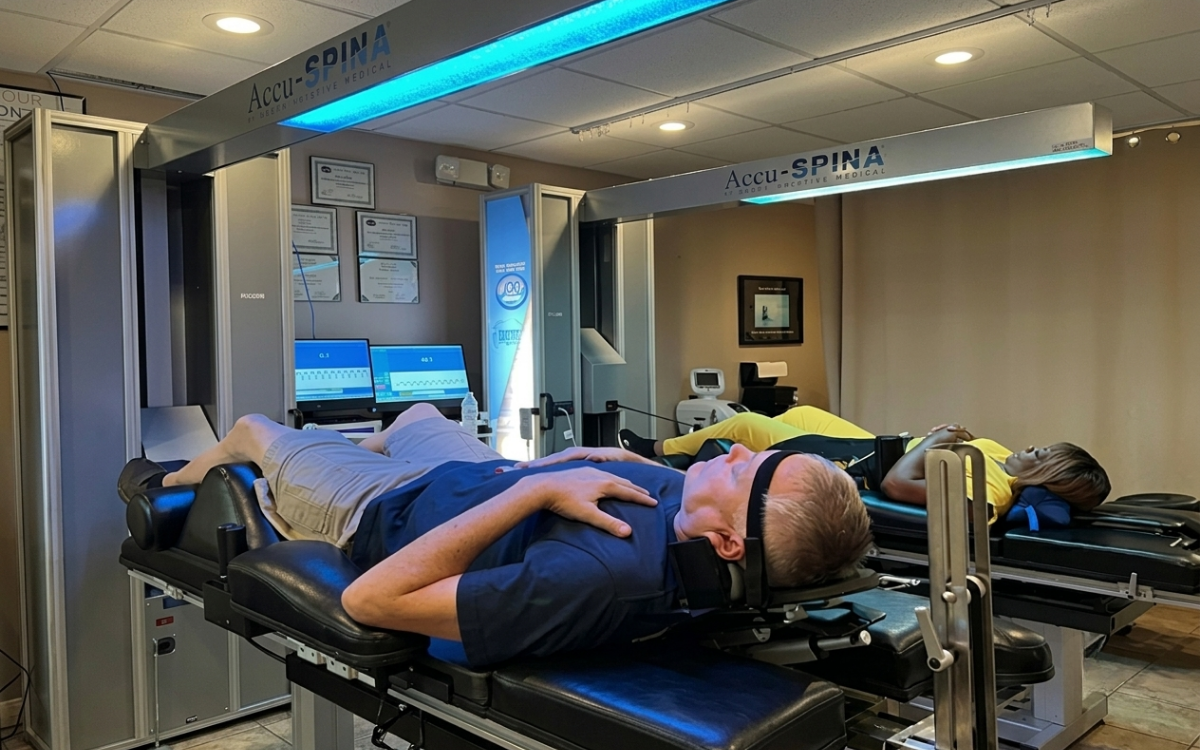
At Dr. Kate McDonough‘s office in Marshfield, Massachusetts, spinal decompression therapy is used to help patients experiencing sciatica, herniated discs, bulging discs, degenerative disc disease, and chronic back pain find lasting relief without surgery, injections, or medication dependence.
In this article, we’ll explore what sciatica is, why it develops, and how spinal decompression may help relieve pressure on affected nerves and promote healing naturally.
Contrary to popular belief, sciatica is not actually a medical condition itself. Instead, it is a collection of symptoms caused by irritation or compression of the sciatic nerve.
The sciatic nerve is the largest nerve in the human body. It originates in the lower spine and travels through the hips, buttocks, and down each leg. For a detailed medical overview of how this nerve functions and becomes compressed, you can read more about sciatica symptoms and causes on the Mayo Clinic website.
When this nerve becomes compressed or inflamed, symptoms may include:
Sharp pain in the lower back
Pain radiating through the buttock
Burning sensations in the leg
Tingling or “pins and needles”
Numbness in the foot or leg
Muscle weakness
Difficulty standing or walking for long periods
Some people experience symptoms on only one side of the body, while others may notice varying degrees of discomfort depending on the underlying cause.
Sciatica can interfere with nearly every aspect of daily life, making effective treatment essential. For a deeper clinical overview of these symptoms, you can read more about Sciatica on Mayo Clinic.
Sciatica is often the result of a structural problem within the spine.
Several conditions can place pressure on the sciatic nerve, including:
One of the most common causes of sciatica is a herniated disc.
Spinal discs act as cushions between the vertebrae. When a disc becomes damaged, part of its inner material can push outward and press against nearby nerves.
This pressure often triggers:
Leg pain
Numbness
Weakness
Tingling sensations
Herniated discs are among the primary conditions treated with spinal decompression therapy.
A bulging disc occurs when the disc extends beyond its normal boundaries without completely rupturing.
Even a slight bulge can create enough pressure to irritate the sciatic nerve.
As people age, spinal discs gradually lose hydration and flexibility.
This natural wear and tear can reduce disc height and create nerve compression that contributes to chronic sciatic pain. Spinal decompression is commonly used to help reduce pressure associated with degenerative disc disease.
Poor posture, repetitive stress, injuries, and improper movement patterns can contribute to spinal misalignments that increase pressure on surrounding structures.
Over time, this stress may contribute to nerve irritation and chronic discomfort. Learn more about how we identify these issues on our Conditions We Treat page.
Many individuals with sciatica initially pursue conservative treatments such as:
Pain medications
Anti-inflammatory drugs
Muscle relaxers
Cortisone injections
Rest
Physical therapy
While these approaches can provide temporary symptom relief, they do not always address the underlying cause of nerve compression.
Pain medications may reduce discomfort but often fail to correct disc problems.
Injections may calm inflammation temporarily, but the source of the pressure may remain unchanged.
When symptoms persist, some patients are told surgery may be necessary.
However, surgery involves:
Recovery time
Potential complications
Significant expense
Variable outcomes
For this reason, many patients seek non-surgical alternatives before considering invasive procedures.
Spinal decompression therapy is a non-surgical treatment designed to reduce pressure on spinal discs and nerves.
Using advanced computerized technology, a specialized decompression table gently stretches the spine in carefully controlled cycles. This process helps create negative pressure within affected discs.
Unlike traditional traction, modern spinal decompression systems continuously adjust based on the patient’s condition and response to treatment. This allows for highly targeted and precise therapy.
The goal is simple:
Reduce pressure on damaged discs and irritated nerves while encouraging the body’s natural healing processes. You can discover more about this and other care options on our Services page.
To understand why spinal decompression can be effective, it helps to visualize what occurs inside the spine during treatment.
Patients lie comfortably on a specialized decompression table.
The system applies carefully controlled stretching and relaxation cycles to specific areas of the spine.
This gentle movement creates separation between vertebrae.
As the vertebrae separate slightly, pressure inside damaged discs decreases.
This reduction in pressure creates a vacuum-like effect.
The negative pressure generated inside the disc may help draw bulging or herniated disc material back toward its normal position.
This can reduce direct pressure on nearby nerves, including the sciatic nerve.
Decompression encourages increased movement of:
Oxygen
Nutrients
Fluids
into damaged spinal discs.
Improved circulation supports tissue repair and healing.
As pressure decreases, inflammation and irritation around affected nerves may begin to subside.
Many patients notice improvements in pain levels, mobility, and overall function as treatment progresses.
For many patients, the answer is yes.
Sciatica often develops because a disc or spinal structure compresses the sciatic nerve.
Because spinal decompression specifically targets disc-related pressure, it can be particularly beneficial when sciatica stems from:
Herniated discs
Bulging discs
Degenerative disc disease
Pinched nerves
Certain cases of spinal stenosis
By reducing pressure on affected structures, spinal decompression may help:
Decrease leg pain
Reduce numbness
Improve mobility
Restore flexibility
Support natural healing
Dr. Kate McDonough‘s clinic specifically highlights sciatica and radiating leg pain as conditions commonly treated through spinal decompression therapy.
Many people appreciate spinal decompression because it offers several potential benefits without the risks associated with surgery.
There are no surgical cuts, stitches, or scars involved.
Patients remain fully awake during treatment.
Most individuals can return to normal daily activities shortly after their session.
Spinal decompression focuses on addressing the source of pain rather than masking symptoms with medication.
Many patients describe treatment as relaxing and comfortable, with some even falling asleep during sessions.
At Dr. Kate McDonough‘s office, treatment plans are customized based on the patient’s specific condition, symptoms, and health history.
You may benefit from spinal decompression if you experience:
Chronic lower back pain
Pain traveling down the leg
Numbness or tingling in the foot
Herniated discs
Bulging discs
Degenerative disc disease
Pinched nerves
Persistent sciatica symptoms
However, not every patient is an ideal candidate.
A comprehensive evaluation is necessary to determine whether spinal decompression is appropriate for your condition and health status. Dr. Kate McDonough performs thorough assessments before recommending treatment.
Many patients are pleasantly surprised by how simple and comfortable spinal decompression therapy is.
Unlike surgery or invasive procedures, there are no needles, incisions, or lengthy recovery periods involved.
During a typical session, you will lie comfortably on a specialized decompression table. A harness is placed around the lower back or pelvic region, depending on the area being treated. The computerized system then gently stretches and relaxes the spine in carefully controlled cycles.
The treatment is specifically designed to target the affected spinal segments without causing discomfort.
Most sessions last between 20 and 30 minutes. Many patients report feeling a gentle stretching sensation and often find the experience relaxing.
Because the treatment is non-invasive, patients can typically return to their normal activities afterward with little to no downtime.
At Dr. Kate McDonough’s office, each treatment plan is customized based on the patient’s diagnosis, symptoms, spinal condition, and overall health goals to ensure the most effective care possible.
The number of spinal decompression sessions required varies depending on several factors, including:
Severity of nerve compression
Duration of symptoms
Presence of disc damage
Overall spinal health
Patient compliance with care recommendations
Individuals with recent onset sciatica may notice improvement relatively quickly, while those with chronic disc degeneration or long-standing nerve irritation often require a more comprehensive treatment plan.
Spinal decompression works by encouraging gradual healing. Because damaged discs often develop over months or years, recovery typically occurs progressively rather than overnight.
Many patients begin noticing improvements after several sessions, including:
Reduced leg pain
Improved mobility
Less numbness and tingling
Better flexibility
Increased ability to perform daily activities
The goal is not simply temporary symptom relief but lasting improvement in spinal function and nerve health. For ongoing tips on spinal wellness and clinic updates, feel free to visit our Blog.
While spinal decompression can be highly effective on its own, combining it with complementary therapies may enhance outcomes.
Depending on the patient’s condition, treatment recommendations may include:
Proper spinal alignment helps reduce unnecessary stress on discs, joints, and nerves.
Chiropractic adjustments may improve spinal biomechanics and support the benefits of decompression therapy.
Specific exercises help strengthen the muscles supporting the spine.
Improved core stability can:
Reduce strain on injured discs
Improve posture
Prevent future flare-ups
Promote long-term spinal health
Poor posture is a common contributor to chronic back pain and sciatica.
Learning proper sitting, standing, and lifting mechanics can help reduce pressure on the lower spine.
Simple lifestyle adjustments often make a significant difference in recovery.
These may include:
Weight management
Ergonomic improvements
Increased physical activity
Stretching routines
Better sleep positioning
A comprehensive approach often provides the best opportunity for long-term relief.
One reason spinal decompression continues to gain popularity is its focus on addressing the mechanical causes of pain rather than simply masking symptoms.
Research has shown that decompression therapy may help create negative intradiscal pressure within spinal discs.
This negative pressure can:
Reduce disc bulging
Improve nutrient exchange
Increase hydration within discs
Relieve nerve compression
Healthy discs depend on the movement of nutrients, oxygen, and fluids to maintain their structure and healing capacity.
When a disc becomes damaged, this process can become impaired.
Spinal decompression aims to restore a healthier environment within the spine, allowing the body to repair itself more effectively.
Although outcomes vary from patient to patient, many individuals with disc-related sciatica experience meaningful improvement through conservative decompression treatment.
Although spinal decompression is safe for many individuals, it is not appropriate for every situation.
Certain conditions may require alternative treatment approaches.
Examples may include:
Severe osteoporosis
Certain spinal fractures
Advanced spinal instability
Spinal infections
Some types of spinal implants
Certain post-surgical conditions
This is why a thorough evaluation is essential before beginning care.
Dr. Kate McDonough carefully assesses each patient’s medical history, symptoms, and spinal condition to determine whether spinal decompression is appropriate.
Many patients are told surgery is inevitable once nerve pain becomes severe.
In reality, numerous individuals experience significant relief through conservative therapies, including spinal decompression.
Surgery is typically reserved for specific situations involving severe neurological deficits, loss of bowel or bladder control, or cases that fail to respond to conservative care.
While brief rest may help during an acute flare-up, prolonged inactivity can often worsen symptoms.
Movement and proper treatment usually play a more important role in recovery.
Pain medications may temporarily reduce discomfort but do not address the underlying structural causes of nerve compression.
Long-term improvement often requires correcting the source of pressure affecting the nerve.
Although age-related degeneration can contribute to sciatica, younger adults can also develop the condition due to:
Sports injuries
Disc herniations
Poor posture
Repetitive strain
Occupational stress
Sciatica involves nerve irritation and often produces symptoms that extend beyond the back itself.
Proper diagnosis is critical because treatment strategies differ depending on the underlying cause.
Most patients find spinal decompression comfortable and relaxing. The treatment uses gentle stretching forces that are carefully controlled by computerized equipment.
Results vary depending on the individual and the severity of the condition. Some patients notice improvement within a few treatments, while others require a longer treatment plan.
Spinal decompression may help reduce pressure within damaged discs and support the body’s natural healing processes. Results vary based on the severity and duration of the condition.
When performed by trained professionals and after proper evaluation, spinal decompression is considered a safe, non-invasive treatment for many spinal conditions.
Yes. Many patients with long-standing sciatica caused by disc-related nerve compression experience significant improvement with spinal decompression therapy.
Many patients seek spinal decompression specifically to avoid surgery. While some severe cases may still require surgical intervention, many individuals find sufficient relief through conservative treatment.
Coverage varies depending on the insurance provider and policy. Patients should contact their insurance company or discuss payment options with the office.
Sciatica can significantly affect your quality of life, making everyday activities uncomfortable and limiting your ability to work, exercise, travel, and enjoy time with family. While many people assume surgery is the only answer, non-surgical options continue to provide hope for individuals seeking lasting relief.
Spinal decompression therapy addresses one of the most common causes of sciatica: pressure on spinal discs and nerves. By gently creating space within the spine, reducing disc pressure, improving circulation, and supporting natural healing, spinal decompression may help many patients find relief without invasive procedures.
For individuals suffering from herniated discs, bulging discs, degenerative disc disease, pinched nerves, and chronic sciatica, spinal decompression represents a promising treatment option worth exploring. Please return to our Homepage to explore our complete list of clinical capabilities.
If you’re tired of living with leg pain, numbness, tingling, or chronic lower back discomfort, professional evaluation can help determine the best treatment approach for your condition.
Dr. Kate McDonough provides personalized spinal decompression therapy and chiropractic care designed to address the root causes of pain and support long-term recovery.
Contact Dr. Kate McDonough today to schedule your consultation and learn whether spinal decompression therapy may be right for you.
📍 Office Address: 844 Webster St, Marshfield, MA 02050, USA
📞 Phone: (781) 635-9697
📧 Email: drkatemcd@gmail.com
🌐 Website: drkatemcdonough.com