
Living with a herniated disc can make even the simplest daily activities feel overwhelming. Getting out of bed, sitting through a workday, driving, exercising, or picking up groceries may suddenly become painful. While many people hope the discomfort will eventually go away on its own, others discover that persistent pain, numbness, or tingling can continue for weeks or even months without proper treatment.
Fortunately, surgery isn’t the only option for many individuals experiencing disc-related back or neck pain. Advances in conservative care have made it possible to address many spinal conditions without invasive procedures. One treatment that continues to gain attention is spinal decompression therapy—a non-surgical approach designed to reduce pressure on spinal discs and encourage the body’s natural healing process.
If you’ve been searching for ways to recover from a herniated disc, understanding how spinal decompression works may help you determine whether it’s the missing piece in your recovery journey.
Your spine is made up of a series of bones called vertebrae. Between each vertebra sits a spinal disc that acts as a cushion, absorbing shock while allowing flexibility and movement. Each disc has two primary components:
A tough outer layer (annulus fibrosus)
A soft, gel-like center (nucleus pulposus)
A herniated disc occurs when the outer layer weakens or tears, allowing part of the inner material to push outward. This bulging or herniated portion of the disc may irritate or compress nearby spinal nerves, resulting in pain and other neurological symptoms. Learn more about the clinical definition of a herniated disc on the Mayo Clinic website.
Although herniated discs can develop anywhere along the spine, they most commonly occur in:
The lumbar spine (lower back)
The cervical spine (neck)
Thoracic herniated discs are much less common but can also cause discomfort.
Symptoms vary depending on which nerve is affected and how severe the disc injury is.
Many patients experience:
Persistent lower back pain
Neck pain
Sciatica
Tingling sensations
Numbness
Burning pain
Muscle weakness
Pain that radiates into the arms or legs
Reduced flexibility
Difficulty standing or walking for extended periods
Some individuals notice symptoms gradually worsening over time, while others experience sudden pain after lifting something heavy or twisting awkwardly.
Several factors increase the likelihood of developing a herniated disc.
As we age, spinal discs naturally lose water content. This makes them less flexible and more prone to tearing.
Jobs involving repeated bending, lifting, twisting, or prolonged sitting place ongoing stress on spinal discs.
Consistently sitting with poor posture increases pressure on the spine, especially the lumbar discs.
Improper lifting mechanics often contribute to disc injuries.
Falls, sports injuries, and automobile accidents may damage spinal discs.
Additional body weight places increased stress on the spine every day.
Weak core muscles provide less support for the spine, making disc injuries more likely.
Many people assume back pain is simply part of getting older, but a herniated disc can affect far more than physical comfort.
Patients often report difficulty:
Sleeping comfortably
Concentrating at work
Sitting during meetings
Driving
Walking long distances
Exercising
Enjoying hobbies
Playing with children or grandchildren
Persistent pain can also contribute to stress, reduced activity levels, and a lower overall quality of life.
The good news is that many herniated discs improve with conservative care. Treatment recommendations typically depend on symptom severity, imaging findings, and the patient’s overall health.
Common approaches include:
Short periods of rest may calm acute inflammation, but prolonged inactivity often slows recovery.
Therapeutic exercises strengthen supporting muscles while improving mobility and posture.
Gentle spinal adjustments may help improve spinal mechanics and reduce joint dysfunction surrounding the injured disc.
Over-the-counter or prescription medications may temporarily reduce pain and inflammation.
Epidural steroid injections may reduce inflammation around irritated spinal nerves.
In severe cases involving progressive neurological symptoms or significant nerve compression, surgery may be recommended.
However, surgery isn’t appropriate—or necessary—for every patient. Many people seek alternatives before considering invasive procedures.
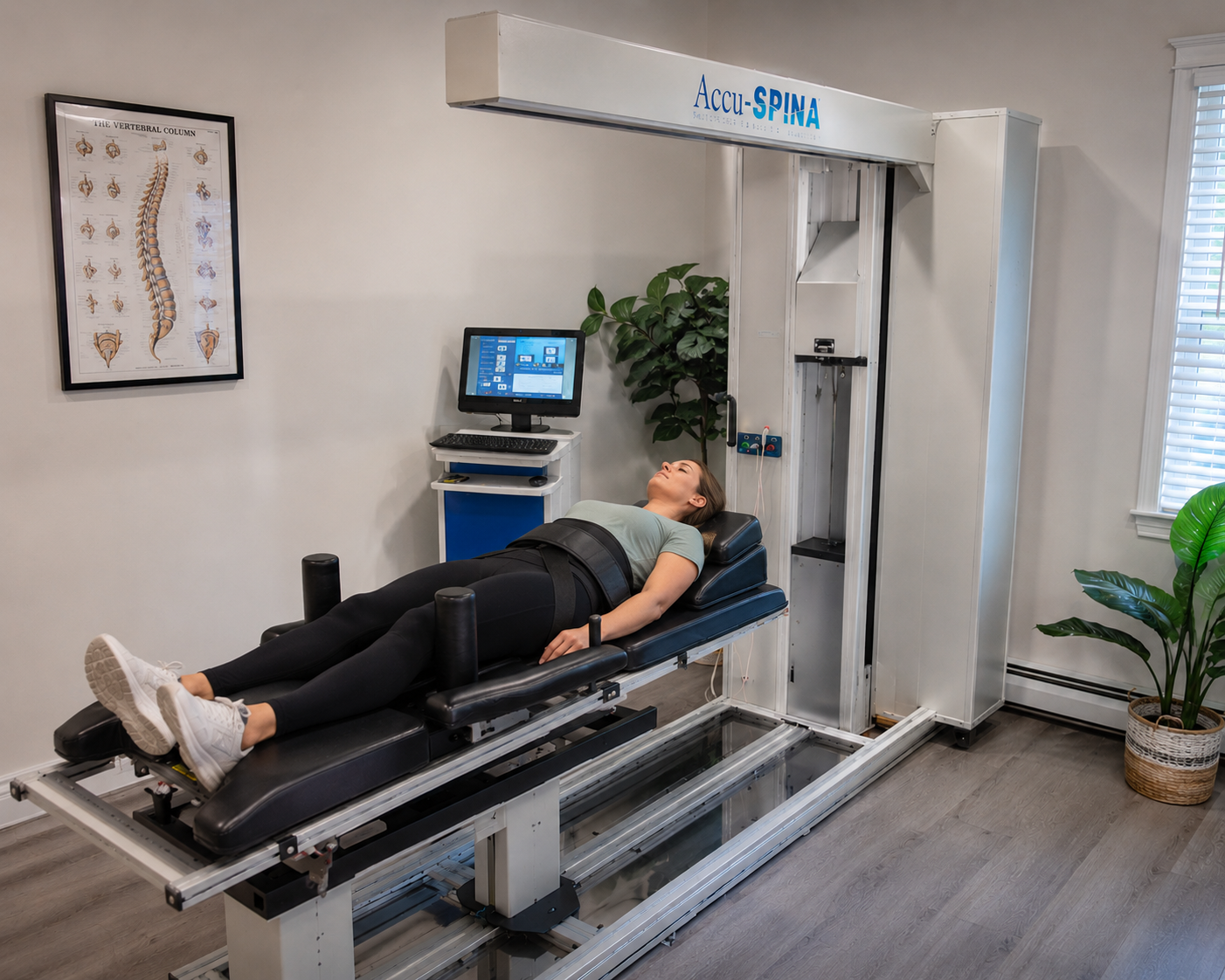
Non-surgical spinal decompression is an advanced therapy that gently stretches the spine using a computerized decompression table.
Unlike manual traction, spinal decompression carefully controls the amount of force applied throughout each treatment session.
The goal is to create negative pressure within affected spinal discs.
This negative pressure may help:
Reduce pressure inside damaged discs
Relieve compression on spinal nerves
Encourage movement of nutrients into spinal discs
Support the body’s natural healing response
Improve spinal mobility
Decrease inflammation associated with disc injuries
Because the treatment is gradual and controlled, patients often find it relaxing rather than uncomfortable.
Healthy spinal discs rely on movement and pressure changes to receive nutrients.
Unlike many other tissues in the body, discs have very limited blood supply. Instead, they absorb oxygen, water, and nutrients through diffusion.
When discs become compressed over time, this nutrient exchange becomes less efficient.
Spinal decompression works by creating alternating cycles of stretching and relaxation.
These cycles may:
Improve fluid movement within discs
Reduce pressure on compressed nerves
Create space between vertebrae
Decrease mechanical stress on injured tissues
Many patients describe feeling gentle stretching during treatment rather than pain.
One of the primary challenges with herniated discs is pressure.
The damaged disc material often presses against nearby nerve roots.
This pressure can trigger:
Pain
Tingling
Numbness
Muscle weakness
Reduced mobility
Spinal decompression is specifically designed to reduce this pressure in a controlled manner.
By temporarily lowering pressure inside the disc, decompression therapy may allow the herniated portion to retract slightly while creating an environment that supports healing.
Although results vary between individuals, many patients experience gradual improvement over several weeks as inflammation decreases and nerve irritation subsides.
While herniated discs are among the most common reasons patients seek decompression therapy, it may also be recommended for several other spinal conditions.
These include:
Bulging discs
Degenerative disc disease
Sciatica
Pinched nerves
Chronic neck pain
Chronic lower back pain
Facet syndrome
Spinal stenosis (in select cases)
A comprehensive examination helps determine whether spinal decompression is appropriate for each individual’s condition. Read more detailed insights regarding spinal conditions and alternative remedies on our Blogs section.
Every patient begins with a detailed evaluation to understand the underlying cause of their symptoms.
Your provider may perform:
A health history review
Physical examination
Orthopedic testing
Neurological assessment
Review of previous imaging such as MRI or X-rays
Functional movement evaluation
This information helps determine whether spinal decompression is likely to be an effective part of your treatment plan.
Rather than taking a one-size-fits-all approach, care is customized based on your diagnosis, symptoms, activity level, and overall health goals. To understand more about our clinical philosophy, you can visit our About Us page.
During treatment, you’ll lie comfortably on a specialized decompression table while secure harnesses are placed around your pelvis or upper body, depending on the area being treated.
The computerized system delivers gentle, precise stretching cycles tailored to your specific condition. These cycles alternate between decompression and relaxation, helping reduce pressure on affected spinal discs while keeping you comfortable throughout the session.
Most sessions last around 20 to 30 minutes. Many patients find the treatment relaxing enough to listen to music or simply rest during their appointment.
Unlike surgical procedures, spinal decompression requires no anesthesia, no incisions, and no lengthy recovery period. After treatment, many people are able to return to their normal daily activities with little to no downtime.
Recovery from a herniated disc varies from person to person. Factors such as the severity of the injury, how long symptoms have been present, overall health, and adherence to the recommended treatment plan all play a role.
Many patients undergoing spinal decompression participate in a series of treatments over several weeks. While some individuals notice improvement after only a few visits, others experience gradual relief as inflammation decreases and the affected tissues continue to heal. Your provider may also recommend complementary therapies, home exercises, posture improvements, and lifestyle modifications to support long-term spinal health and help reduce the likelihood of future injuries.
Spinal decompression may be an excellent option for individuals who have been diagnosed with a herniated disc and continue to experience pain despite conservative treatments. It is often considered for patients seeking a non-surgical solution before exploring more invasive procedures.
However, spinal decompression is not appropriate for everyone. Certain conditions, such as severe osteoporosis, spinal fractures, spinal infections, some advanced cases of spinal instability, or specific medical implants, may make this therapy unsuitable. A comprehensive evaluation is essential to determine whether spinal decompression is a safe and effective choice for your specific needs. Learn more about the range of issues we address by visiting our Conditions We Treat guide.
At Dr. Kate McDonough, every treatment plan begins with a thorough assessment to ensure patients receive care tailored to their condition and recovery goals.
While professional treatment is an important part of healing, your daily habits can significantly influence your recovery.
To support spinal health, consider:
Maintaining good posture while sitting and standing.
Taking regular breaks from prolonged sitting.
Performing provider-approved stretching and strengthening exercises.
Using proper lifting techniques by bending at the knees rather than the waist.
Staying hydrated to support healthy spinal discs.
Maintaining a healthy weight to reduce stress on the spine.
Following your recommended treatment plan consistently.
Small lifestyle changes can complement spinal decompression therapy and contribute to lasting improvements in comfort and mobility.
Most patients describe spinal decompression as a gentle, comfortable treatment. Many even find the rhythmic stretching relaxing.
The number of sessions depends on your diagnosis, symptom severity, and response to care. Your provider will recommend a personalized treatment schedule after your evaluation.
While no treatment can guarantee complete healing, spinal decompression may help reduce pressure on affected discs, improve symptoms, and support the body’s natural healing processes. Results vary from person to person.
Many individuals experience meaningful improvement with conservative care and may avoid surgery. However, every case is unique, and severe neurological symptoms or certain spinal conditions may still require surgical consultation.
In many cases, patients can continue most daily activities while undergoing spinal decompression. Your provider may recommend temporary activity modifications depending on your condition.
A herniated disc doesn’t have to dictate your quality of life. If persistent back pain, neck pain, or radiating nerve symptoms are limiting your daily activities, exploring conservative treatment options may help you find lasting relief.
Non-surgical spinal decompression is designed to reduce pressure on injured spinal discs while supporting the body’s natural healing process. When combined with a personalized treatment plan, healthy lifestyle habits, and expert guidance, it may become an important part of your recovery journey.
If you’re looking for a non-invasive approach to managing herniated disc pain, the experienced team at Dr. Kate McDonough can evaluate your condition and determine whether spinal decompression therapy is right for you. Explore our full range of therapeutic options on our Services page.
If you’re ready to take the next step toward lasting relief from herniated disc pain, contact Dr. Kate McDonough to learn more about personalized, non-surgical spinal decompression therapy. A comprehensive evaluation can help identify the source of your discomfort and create a treatment plan designed around your unique needs and goals.
Dr. Kate McDonough
Address: 844 Webster St, Marshfield, MA 02050, USA
Phone: (781) 635-9697
Email: drkatemcd@gmail.com
Don’t let a herniated disc keep you from living the active life you enjoy. Reach out today to discover how spinal decompression may be the missing piece in your recovery.