
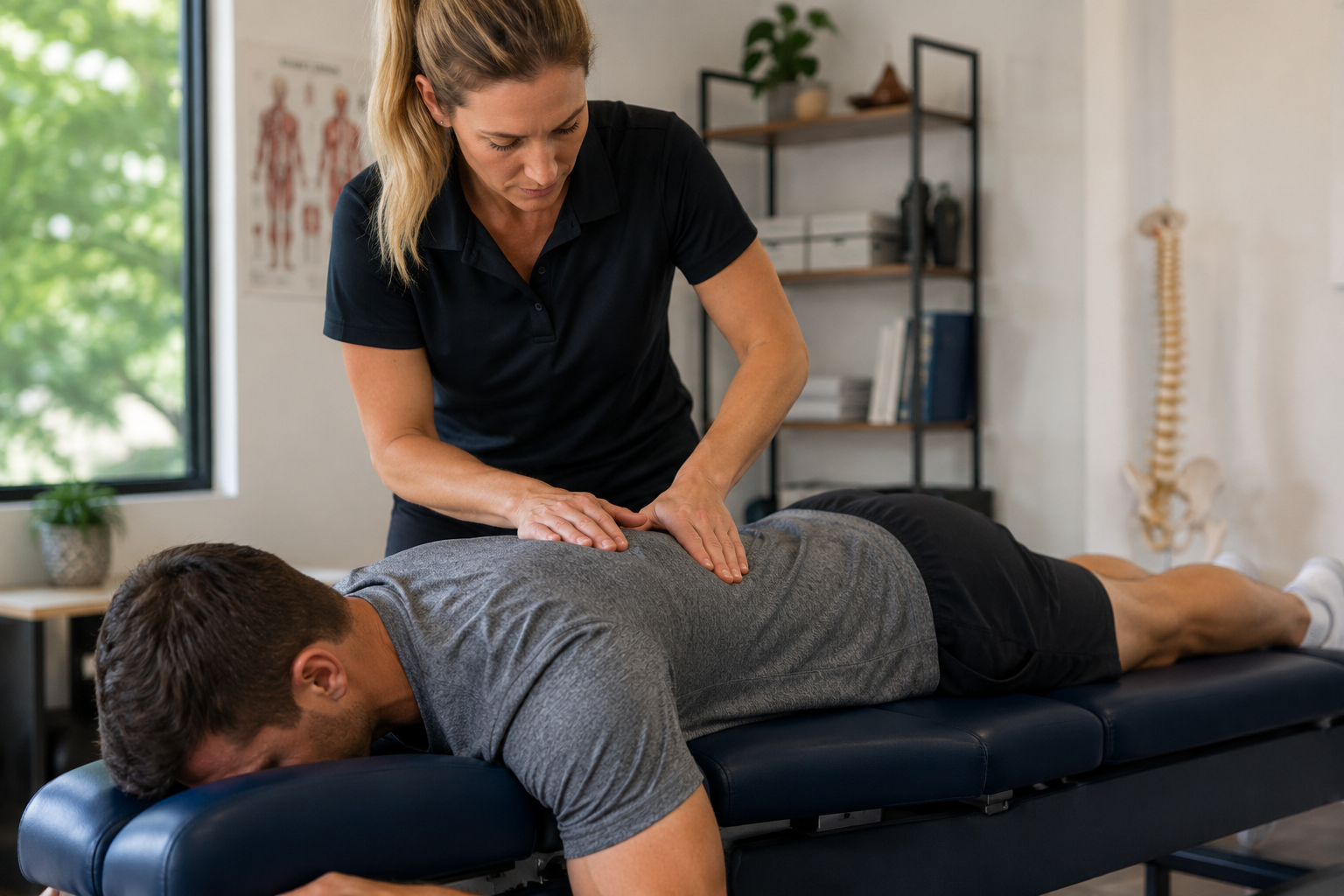
Sports injuries can happen to anyone. You might be a competitive athlete training several days a week, a weekend runner, someone who enjoys recreational sports, or simply a person who stays active through exercise. A sudden twist, awkward landing, collision, overuse, or repetitive movement can lead to pain that affects much more than your ability to participate in a favorite activity.
At our practice, we understand that recovering from a sports injury is about more than temporarily reducing discomfort. The goal is to help you understand what is contributing to your symptoms, restore comfortable movement, and give your body the support it needs as you work toward returning to the activities you enjoy.
Our chiropractic care services are designed around individualized evaluation and treatment. At Dr. Kate McDonough, chiropractic care is one of several services available alongside spinal decompression, NeuroMed Matrix Therapy, and laser therapy. We also specifically list sports injuries, knee pain, ankle and foot pain, shoulder pain, neck pain, hip pain, elbow pain, and back pain among the conditions we help address.
A sports injury does not always mean you have suffered a major tear or fracture. Some injuries develop gradually because the same muscles, joints, tendons, or other tissues are repeatedly exposed to stress without enough recovery time.
Sports injuries generally fall into two broad categories: acute injuries and overuse injuries. Acute injuries can occur after a sudden fall, collision, twist, or impact. Sprains, strains, and bruises are common examples. Overuse injuries develop more gradually when tissues repeatedly experience stress without adequate time to recover.
This distinction matters because recovery should reflect the nature of the injury.
A runner with recurring hip or knee discomfort may need a different approach from someone who recently suffered a back strain while lifting weights. Likewise, a person who experiences neck or shoulder pain after contact sports may require a different evaluation from someone whose symptoms developed after months of repetitive activity.
Our first priority is understanding the individual situation rather than assuming every sports injury should be treated in exactly the same way.
Chiropractic care focuses on the relationship between the body’s structure, movement, and function. When pain changes how you move, other areas may begin compensating.
For example, imagine an athlete develops ankle pain. Instead of pushing off normally, that person may unconsciously shift weight to the opposite side. Over time, according to health insights from the Cleveland Clinic, this altered movement can place additional stress on the knee, hip, pelvis, or lower back.
The original injury may be localized, but the movement changes can affect the rest of the body.
Our chiropractic approach can be used to evaluate areas of restricted or altered movement and determine whether appropriate chiropractic treatment may help restore better function.
Spinal manipulation is one technique used in chiropractic care. According to the National Center for Complementary and Integrative Health (NIH), spinal manipulation may provide modest improvements in pain and function for some people with acute or chronic low-back pain.
However, chiropractic care should not be viewed as a universal solution for every sports injury. A thorough evaluation is important, particularly when symptoms could indicate a more serious injury requiring medical or orthopedic care.
When people hear the word chiropractic, they often immediately think of spinal adjustments. While adjustments can be part of care, sports injury recovery involves much more than a single technique.
Our goal is to understand how an injury is affecting movement and daily activities.
That may involve looking at:
Where the pain started
How the injury occurred
Which movements increase symptoms
Whether mobility has changed
Whether discomfort is affecting other areas
How the injury is affecting exercise or sports participation
Whether symptoms are improving, staying the same, or worsening
Whether additional evaluation may be appropriate
This broader perspective is important because pain is not always a perfect indicator of where the problem originates.
A sore knee, for example, may be influenced by movement patterns involving the hip, ankle, or lower back. Similarly, shoulder discomfort may be affected by posture and movement through the upper back and neck.
Our website specifically identifies sports injuries as a condition we help treat, along with several areas commonly affected by athletic activity.
Sprains involve ligaments, while strains involve muscles or tendons. These injuries can occur during running, jumping, lifting, throwing, changing direction, or contact sports.
Symptoms can include pain, swelling, stiffness, weakness, muscle spasms, and difficulty using the affected area. More significant injuries may require medical evaluation and, in some cases, surgery.
Once serious injury has been ruled out, appropriate conservative care can become part of the recovery process.
Back pain is common among athletes and active individuals. Weightlifting, running, gymnastics, contact sports, and repetitive movements can all place stress on the back.
Our chiropractic services may be appropriate when back pain is related to mechanical problems or altered movement, but severe or unusual symptoms should always be properly evaluated before treatment.
Neck and shoulder problems can affect athletes participating in football, hockey, baseball, tennis, swimming, weightlifting, and other activities.
Pain may interfere with turning the head, reaching overhead, throwing, lifting, or maintaining proper athletic form.
Our practice provides chiropractic care as well as other non-invasive services that may be considered depending on the individual’s condition.
Lower-extremity injuries can significantly affect athletic performance because walking, running, jumping, and changing direction all depend on coordinated movement.
Our practice lists knee pain, hip pain, ankle and foot pain, and plantar fasciitis among the conditions we help treat.
One of the biggest mistakes athletes can make is returning to full activity simply because the pain has decreased.
Feeling better does not necessarily mean the body is ready for maximum physical demand.
For example, an athlete may be able to walk comfortably but still experience weakness or limited mobility when sprinting, jumping, cutting, or changing direction.
Returning gradually gives the body an opportunity to rebuild strength, mobility, coordination, and confidence.
The American Academy of Orthopaedic Surgeons recommends allowing adequate healing time and restoring strength and flexibility before returning to sports after muscle injuries.
Our approach is therefore focused on helping patients make informed decisions about recovery rather than encouraging them to push through pain simply to get back on the field faster.
A smarter recovery strategy recognizes that healing is a process.
Instead of thinking, “How quickly can I ignore this pain?” a better question is, “What does my body need to safely return to activity?”
That shift can make a major difference.
Depending on the injury and individual needs, chiropractic care may be part of a broader recovery plan that emphasizes appropriate movement, symptom management, mobility, and gradual return to activity.
Our other services may also have a role when appropriate. Our practice offers spinal decompression, NeuroMed Matrix Therapy, and laser therapy in addition to chiropractic care. The website describes laser therapy as a non-invasive approach intended to help reduce inflammation, support tissue repair, and ease pain associated with injuries or chronic conditions.
For certain patients, laser therapy may be considered as part of an overall treatment plan.
Our practice describes laser therapy as a non-invasive service that can be used for injuries and chronic conditions. The treatment is intended to support tissue repair and reduce inflammation without medication or downtime.
This can be particularly relevant when an athlete is dealing with lingering soft-tissue discomfort after an injury.
The important point is that no single treatment should automatically be considered the answer for every athlete. Treatment should be based on the condition, symptoms, goals, and clinical evaluation.
Recovery should not end when pain disappears.
Once an athlete is feeling better, it is worth considering why the injury occurred in the first place.
Some risk factors are straightforward: inadequate warm-up, sudden increases in training intensity, poor recovery, fatigue, repetitive stress, or returning to activity too aggressively.
The AAOS recommends warming up before exercise, allowing adequate recovery, using appropriate protective equipment, and gradually returning to sports rather than immediately pushing the body to maximum intensity.
Good recovery habits include:
Warming up before intense activity
Cooling down afterward
Taking recovery days
Increasing training gradually
Paying attention to persistent pain
Maintaining strength and mobility
Using proper technique
Getting injuries evaluated when symptoms persist
Following a gradual return-to-sport plan
These habits can help athletes stay active while reducing unnecessary stress on the body.
Not every ache requires immediate professional treatment. Temporary soreness after unfamiliar exercise can be normal.
However, persistent or worsening symptoms deserve attention.
Consider seeking professional evaluation when pain:
Does not improve with reasonable rest
Continues to interfere with exercise
Limits normal movement
Causes weakness or instability
Keeps returning during activity
Is accompanied by significant swelling
Develops after a major collision or fall
Prevents normal weight-bearing
Is affecting sleep or daily activities
Severe injuries, suspected fractures, significant instability, neurological symptoms, or other concerning symptoms may require prompt medical evaluation rather than routine chiropractic treatment.
We believe responsible care includes recognizing when another healthcare professional or additional diagnostic evaluation is appropriate.
Our practice emphasizes personalized care rather than a one-size-fits-all approach. The goal is to understand your symptoms and develop a plan based on your specific needs.
The first step is discussing what happened and how the injury affects your daily life or athletic activity.
From there, an appropriate examination can help determine whether chiropractic care is suitable and what treatment options may be considered.
Our website describes our chiropractic services as focusing on adjustments intended to address misalignments, reduce pain, and restore function.
The exact treatment approach should always be individualized.
Chiropractic care may help some people manage musculoskeletal pain and movement problems associated with sports injuries. Its appropriateness depends on the type and severity of the injury. A proper evaluation is important before beginning treatment.
No. Our practice provides chiropractic care for a variety of conditions and specifically lists sports injuries, knee pain, ankle and foot pain, shoulder pain, hip pain, elbow pain, neck pain, and back pain among the conditions we help treat.
It depends on the injury. Some injuries require immediate medical or orthopedic evaluation, especially when there is suspected fracture, major instability, significant trauma, or concerning neurological symptoms. When appropriate, chiropractic care can become part of a conservative recovery plan.
There is no universal recovery timeline. Mild injuries may improve relatively quickly, while significant injuries can require weeks or longer. Recovery depends on the type and severity of the injury, overall health, activity level, and how well the body responds to treatment and rehabilitation.
That depends on the injury and the stage of recovery. Continuing to perform movements that significantly aggravate an injury can delay recovery. A gradual return to activity is generally preferable to immediately resuming full-intensity training.
Chiropractic care may be incorporated into a broader approach to movement and musculoskeletal health, but no treatment can guarantee that an injury will never occur. Training habits, conditioning, recovery, technique, equipment, and gradual progression all matter.
Yes. Depending on the individual’s condition, chiropractic care may be incorporated alongside other appropriate approaches. Our practice also offers spinal decompression, NeuroMed Matrix Therapy, and laser therapy.
Spinal manipulation is generally considered relatively safe when performed appropriately by a trained practitioner, although temporary soreness, stiffness, discomfort, or headache can occur. Serious complications are rare, and health conditions and medications should be discussed with the practitioner beforehand.
Sports injuries can interrupt training, competition, exercise, work, and everyday life. But recovery does not have to mean simply waiting for pain to disappear.
A thoughtful approach looks at the injury, movement, symptoms, recovery habits, and individual goals.
At Dr. Kate McDonough, our chiropractic care services are part of a broader approach to helping patients manage pain and improve physical function. We provide chiropractic care alongside services such as spinal decompression, NeuroMed Matrix Therapy, and laser therapy, giving us multiple non-invasive options to consider based on an individual’s needs.
Whether you’re dealing with back pain after lifting, shoulder discomfort from throwing, knee pain from running, an ankle problem after a twist, or another sports-related issue, getting the right evaluation is an important first step.
The objective is not simply to get through today’s workout. It is to help you understand your injury, support appropriate recovery, and work toward moving confidently again.
If a sports injury is keeping you from doing what you enjoy, our team is here to help you explore your options. Schedule an evaluation with Dr. Kate McDonough to discuss your symptoms, your activity level, and your recovery goals. We can determine whether chiropractic care or another service available through our practice may be appropriate for your situation.
Dr. Kate McDonough
📍 Office Address: 844 Webster St, Marshfield, MA 02050, USA
📞 Phone: (781) 635-9697
📧 Email: drkatemcd@gmail.com