
Pinched nerve pain can be frustrating and uncomfortable. You may experience sharp or shooting pain, tingling, numbness, burning sensations, or weakness in your neck, back, arms, hands, legs, or feet.
A pinched nerve occurs when surrounding tissue puts pressure on a nerve. When the affected nerve is near the spine, causes may include a herniated or bulging disc, inflammation, bone changes, injury, or other spinal conditions.
The Mayo Clinic explains that pinched nerves can cause pain, tingling, numbness, and weakness, depending on the location and severity of the compression.
Fortunately, a pinched nerve does not automatically mean surgery. Many cases improve with conservative care, lifestyle changes, and time. For patients whose symptoms are associated with certain spinal conditions, spinal decompression may be one non-surgical treatment option to consider.
At Dr. Kate McDonough in Marshfield, MA, care focuses on identifying possible causes of symptoms and developing an individualized treatment approach.
A pinched nerve is a common term used when a nerve becomes compressed or irritated by surrounding tissue. This can happen in areas such as the neck, back, wrist, elbow, or ankle.
When a spinal nerve root is compressed, symptoms may travel away from the spine:
Neck Compression: May cause symptoms in the shoulder, arm, hand, or fingers.
Lower Back Compression: May cause symptoms in the buttocks, leg, or foot.
According to the Cleveland Clinic, pressure from surrounding bones, muscles, ligaments, or other tissues can cause symptoms such as pain, numbness, tingling, and weakness.
Because several different conditions can produce similar symptoms, identifying the potential source is an important part of treatment.
Symptoms vary depending on the affected nerve and the amount of compression.
Sharp or shooting pain
Burning sensations
Tingling or pins-and-needles
Numbness or reduced sensation
Muscle weakness
Pain that radiates into an arm or leg
Reduced mobility
Some people notice symptoms more when sitting, bending, lifting, sleeping, or staying in one position for a long time.
The Mayo Clinic identifies radiating pain, tingling, reduced sensation, and weakness as possible signs of nerve compression. If symptoms continue or begin affecting work, exercise, sleep, or everyday activities, an evaluation can help determine what may be causing them.
Several factors can contribute to nerve compression:
Primary Causes | Contributing Factors |
Herniated or bulging discs | Repetitive movements |
Spinal degeneration & Bone spurs | Poor posture & Muscle tension |
Direct Injuries | Prolonged pressure & Inflammation |
A herniated or bulging disc can be particularly important when nerve symptoms originate in the spine. Spinal discs sit between the vertebrae and help absorb shock. When a disc becomes damaged or changes position, it can irritate or compress a nearby nerve.
Previous injuries, repetitive activities, sports, and other physical demands can also contribute to spinal and nerve problems. Understanding the possible cause helps determine which treatment options may be appropriate.
Depending on where the nerve compression occurs along the spine, your symptoms will manifest differently:
1. Pinched Nerve in the Neck (Cervical)
A cervical pinched nerve can produce symptoms far beyond the neck area itself, making typing, driving, exercising, lifting, and sleeping uncomfortable:
Neck pain and shoulder pain
Arm pain and tingling in the hand
Numbness in the fingers and weakness in the arm or hand
Note: Arm or hand symptoms do not always mean you have a pinched nerve. Other conditions can produce similar symptoms, which is why proper evaluation is important.
2. Pinched Nerve in the Lower Back (Lumbar)
Nerve compression in the lower back can cause symptoms that travel into the lower extremities. One common example is sciatica. According to the Mayo Clinic, sciatica commonly occurs when a herniated disc or bone growth puts pressure on nerves in the lower spine.
Symptoms include:
Lower back and buttock pain
Shooting leg pain and burning sensations
Tingling, numbness, or leg/foot weakness
Certain movements, prolonged sitting, coughing, or sneezing may make symptoms more noticeable.
Some pinched nerves improve within days or weeks with rest, activity modification, and conservative care. However, recovery depends on the cause and severity of the compression.
Warning: Persistent pressure can cause ongoing symptoms and, in some cases, permanent nerve damage. If numbness, tingling, pain, or weakness continues, professional evaluation is strongly recommended.
Rather than simply waiting for symptoms to disappear, understanding the cause can help determine whether additional treatment is appropriate.
Diagnosis usually begins with a thorough discussion about your symptoms and medical history. A physical examination may evaluate:
Muscle strength and reflexes
Sensation and range of motion
Pain patterns and activities that worsen symptoms
History of previous injuries
Depending on your symptoms, additional testing or imaging may be recommended. The goal is to determine whether nerve compression is likely and identify where the problem may be coming from.
Spinal decompression is a non-surgical treatment approach designed to reduce pressure around certain structures of the spine.
The Cleveland Clinic explains that spinal decompression therapy aims to relieve pressure that may affect spinal structures and nerves. It may be considered for certain conditions involving herniated discs, bulging discs, sciatica, spinal stenosis, and pinched nerves.
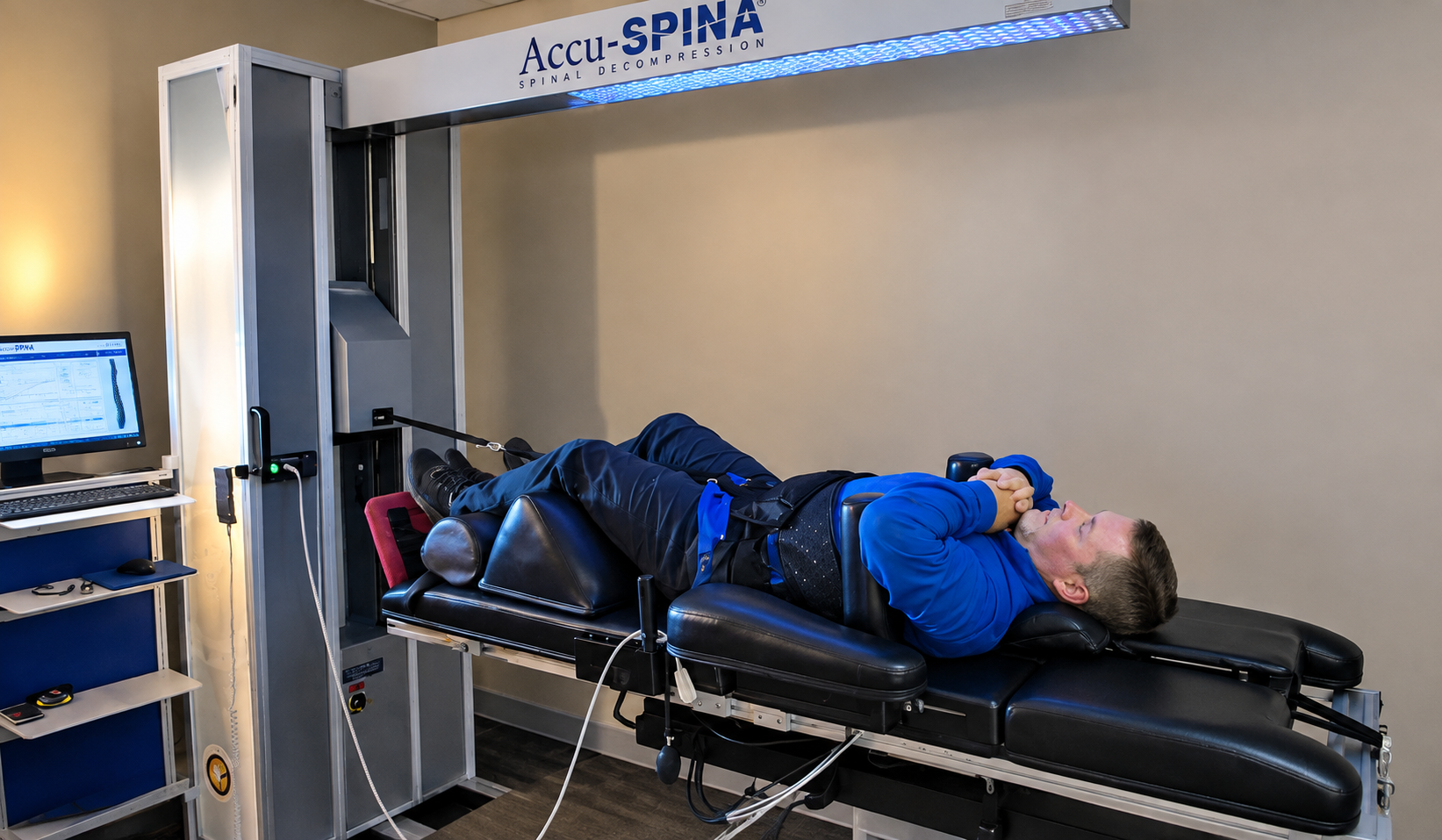
At Dr. Kate McDonough, non-surgical spinal decompression uses controlled technology designed to gently stretch targeted areas of the spine. The clinic describes the treatment as a non-invasive approach for certain disc-related and spinal conditions.
When nerve symptoms are connected to certain spinal conditions, reducing mechanical pressure may be one part of a conservative treatment plan.
Spinal decompression uses controlled distraction of the spine with the goal of creating a more favorable environment around affected spinal structures. Dr. Kate McDonough includes pinched nerves among the conditions we treat with spinal decompression, describing the approach as helping address disc pressure and irritation associated with certain symptoms.
However, spinal decompression is not appropriate for every type of nerve pain. A pinched nerve may occur outside the spine, and different causes require different treatments. That is why an individualized evaluation should come before treatment.
Spinal decompression is only one possible component of care. Depending on the cause of your symptoms, treatment may include several approaches through our comprehensive Services page:
Chiropractic Adjustments: Used to improve spinal movement and address mechanical factors contributing to discomfort.
Laser Therapy: A non-invasive treatment option that may be incorporated into a broader care plan for pain and inflammation.
Targeted Rehabilitation: Stretching, strengthening, mobility exercises, and other rehabilitation strategies to support movement and function.
NeuroMed Matrix Therapy: Advanced non-invasive treatment for chronic pain and nerve irritation.
Treatment may involve one therapy or a combination of approaches depending on your condition and goals.
Non-surgical spinal decompression should not be confused with surgical decompression:
Surgery: Involves an incision to remove or alter tissue directly compressing a nerve. The Mayo Clinic notes that surgery can sometimes be necessary when pressure on a nerve does not improve with conservative care.
Non-Surgical Decompression: Controlled, non-invasive therapy that involves no incisions or surgical removal of tissue.
For appropriate patients, conservative treatment provides an option to explore before considering more invasive procedures.
Spinal decompression is designed to be controlled and non-invasive.
At Dr. Kate McDonough, specialized equipment is used to provide controlled decompression based on the patient’s condition. Before beginning treatment, your symptoms, health history, and spinal condition should be evaluated. Your treatment plan may be adjusted according to your response to care and individual needs.
No. Spinal decompression is not appropriate for every patient or every cause of nerve pain.
A provider should consider your symptoms, medical history, diagnosis, and overall health before recommending treatment. If your symptoms are caused by a nerve problem outside the spine, decompression may not address the underlying issue.
The goal should always be to treat the root cause of the symptoms, not simply the label “pinched nerve.”
Consider a professional evaluation if your symptoms:
Continue for an extended period
Become increasingly painful
Cause persistent numbness or tingling
Lead to weakness or interfere with sleep/daily activities
Keep returning
Urgent Notice: Certain symptoms require immediate medical attention. The Mayo Clinic recommends immediate care for symptoms such as sudden numbness or weakness, or changes in bowel or bladder control. Do not assume sudden or severe neurological symptoms are simply a pinched nerve.
Your everyday habits play a major role in supporting long-term spinal health. Mayo Clinic recommends the following habits to help reduce the risk of nerve compression:
Staying physically active with strength and flexibility exercises
Maintaining good posture and ergonomic positioning
Changing positions regularly and taking breaks from prolonged sitting
Using proper lifting techniques
Maintaining a healthy weight
Avoiding repetitive movements that aggravate symptoms
1. What does a pinched nerve feel like?
It may feel like sharp, burning, shooting, or radiating pain. Tingling, numbness, and muscle weakness can also occur.
2. Can a pinched nerve cause numbness?
Yes. Nerve compression can interfere with normal sensory signals, leading to numbness or reduced feeling.
3. Can a pinched nerve cause tingling?
Yes. A pins-and-needles or tingling sensation is a very common sign of nerve irritation.
4. Can a pinched nerve cause weakness?
Yes. Compression of a motor nerve can affect muscle function and cause weakness in an arm, hand, leg, or foot.
5. Can spinal decompression help a pinched nerve?
It may be considered when nerve symptoms are associated with certain spinal conditions, including disc-related problems. It is not appropriate for every cause of nerve pain.
6. Is spinal decompression surgery?
No. Non-surgical spinal decompression does not involve incisions, anesthesia, or tissue removal.
7. How long does a pinched nerve take to heal?
Some mild cases improve within days or weeks with rest, while persistent or severe cases require professional evaluation and structured care.
8. Can a herniated disc cause a pinched nerve?
Yes. A herniated disc can bulge outward and place direct pressure on a nearby spinal nerve root.
9. When should I see a healthcare professional?
Seek evaluation if symptoms persist, worsen, or interfere with daily life. Sudden weakness, severe numbness, or bowel/bladder changes require prompt medical attention.
10. What treatments are available?
Treatment depends on the cause. Options include activity modification, targeted rehabilitation, chiropractic care, spinal decompression, laser therapy, medication, and, in severe cases, surgery.
Pinched nerve pain can affect far more than your neck or back. Compression or irritation of a nerve may cause pain, tingling, numbness, burning sensations, or weakness that travels into the arms or legs.
The key is understanding why the nerve is irritated. Herniated discs, spinal changes, injuries, inflammation, and repetitive activities can all contribute to nerve symptoms.
For appropriate patients, spinal decompression may be one non-surgical option for addressing symptoms associated with certain spinal conditions. Dr. Kate McDonough also provides chiropractic care, laser therapy, rehabilitation, and other treatment options designed around individual needs.
Persistent symptoms should not be ignored. A professional evaluation can help determine whether a pinched nerve may be contributing to your discomfort and which treatment options are right for you.
Explore our About Us page, Services, Conditions We Treat, and Blog to learn more.
Persistent pain, numbness, tingling, or weakness can make everyday activities more difficult. Understanding the possible source of your symptoms is an important first step toward finding appropriate care.
Dr. Kate McDonough provides personalized, non-invasive treatment options for patients dealing with spinal and nerve-related conditions.
Visit the Dr. Kate McDonough Homepage to learn more about available care, or visit our Contact Us page to discuss your symptoms and treatment options.
📍 Office Address: 844 Webster St, Marshfield, MA 02050, USA
📞 Phone: (781) 635-9697
📧 Email: drkatemcd@gmail.com
Take the next step toward understanding your pinched nerve symptoms and finding a personalized path toward better comfort and mobility!