
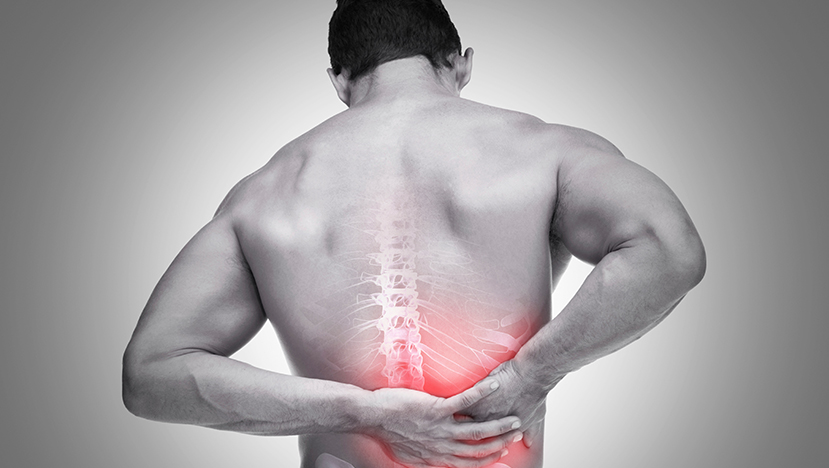
Foraminal stenosis can cause pain, numbness, tingling, or weakness when narrowing around the openings where spinal nerves exit puts pressure on a nerve. These symptoms can interfere with walking, sitting, sleeping, working, exercising, and everyday activities.
If you have been diagnosed with foraminal stenosis, you may wonder whether spinal decompression for foraminal stenosis can help reduce pressure on irritated nerves and improve comfort without surgery.
The answer depends on what is causing the narrowing, its severity, your symptoms, overall health, and how your spine responds to conservative care. A thorough evaluation is important before determining whether spinal decompression is appropriate.
At Dr. Kate McDonough’s practice in Marshfield, MA, spinal decompression is one of the non-surgical services offered for certain spinal conditions. Treatment is individualized according to each patient’s symptoms and clinical needs.
The spine contains openings called neural foramina. These openings provide pathways for spinal nerves as they leave the spinal column and travel to other areas of the body.
Foraminal stenosis occurs when one of these openings becomes narrower. The reduced space may irritate or compress a spinal nerve.
According to Cleveland Clinic, foraminal stenosis can cause symptoms such as pain, tingling, numbness, and muscle weakness when a spinal nerve is affected. Some people may have foraminal narrowing without experiencing symptoms.
Foraminal stenosis can occur in different areas of the spine. Cervical foraminal stenosis may affect nerves traveling toward the shoulders, arms, or hands. Lumbar foraminal stenosis may contribute to symptoms extending into the hips, buttocks, legs, or feet.
Foraminal stenosis can develop for several reasons. Age-related spinal changes are common, but they are not the only possible cause.
Changes that may contribute to narrowing include:
Bone spurs associated with arthritis
Herniated or bulging discs
Degenerative changes in the spine
Thickened ligaments
Changes in the spinal joints
Previous spinal injuries
Structural changes in the spine
According to MedlinePlus, spinal stenosis may be associated with aging, arthritis, bulging or ruptured discs, thickened bones or ligaments, injuries, and other spinal conditions.
Not everyone with foraminal narrowing develops symptoms. Imaging findings do not always directly correspond with the amount of pain a person experiences. For this reason, evaluation should consider your symptoms, physical findings, medical history, and available imaging rather than relying on an imaging report alone.
Symptoms depend on the location of the narrowed foramen and which nerve is affected.
Common symptoms may include:
Localized neck or back pain
Pain that travels into an arm or leg
Numbness
Tingling or pins-and-needles sensations
Muscle weakness
Burning or shooting sensations
Changes in mobility or physical function
Lumbar foraminal stenosis may cause symptoms traveling from the lower back into the buttock, thigh, lower leg, or foot. Cervical foraminal stenosis may contribute to symptoms traveling from the neck toward the shoulder, arm, or hand.
The pattern and location of symptoms can provide important information about which spinal nerve may be involved.
Diagnosis generally begins with a discussion of your symptoms and medical history, followed by a physical examination.
Your healthcare provider may evaluate:
Where your pain is located
Whether symptoms radiate into an arm or leg
Whether you experience numbness or tingling
Whether you have weakness
Which positions increase or decrease symptoms
Your range of motion
Reflexes and neurological function
Previous injuries or spinal conditions
Previous treatments and their results
Imaging may also be recommended when appropriate.
Mayo Clinic explains that evaluation for spinal stenosis can include a medical history, physical examination, and imaging such as X-rays, MRI, or CT scans. MRI can provide detailed information about discs and other soft tissues.
If you already have an MRI or other spinal imaging, bring those records to your consultation when possible. Imaging can provide useful information, but your symptoms and examination findings are also important when determining an appropriate care plan.
This is one of the most common questions patients have after receiving a diagnosis.
Spinal decompression may be considered for certain patients with foraminal stenosis, particularly when symptoms are associated with disc-related or nerve-pressure problems. However, it is not appropriate for every person or every type of stenosis.
Spinal decompression uses controlled traction to gently unload targeted areas of the spine. The goal is to reduce mechanical stress and pressure in selected spinal segments.
At Dr. Kate McDonough’s practice, spinal decompression is used as a non-surgical treatment option for several disc- and spine-related conditions, including spinal stenosis with nerve compression, herniated or bulging discs, degenerative disc disease, sciatica, pinched nerves, and chronic back or neck pain.
Learn more about Spinal Decompression Therapy.
Treatment is customized according to the patient’s condition and needs. The goal is not simply to apply traction but to determine whether controlled decompression is a reasonable component of an individual’s broader treatment plan.
Spinal decompression involves positioning the patient on a specialized decompression table. The equipment applies controlled traction to a targeted portion of the spine.
The process may include:
1. Evaluation
The first step is understanding the source of your symptoms. Your history, physical examination, symptoms, and available imaging may all be considered.
2. Individualized Treatment Planning
If spinal decompression appears appropriate, a treatment plan can be developed around your condition and goals.
3. Controlled Decompression
You lie comfortably on the decompression table while controlled traction is applied to the targeted spinal area.
4. Progress Monitoring
Your symptoms, mobility, and response to treatment can be monitored throughout your care.
The goal is to provide a controlled, individualized approach rather than assuming the same treatment parameters are appropriate for everyone.
When a patient is an appropriate candidate, spinal decompression may be incorporated into care for symptoms associated with:
Herniated discs
Bulging discs
Degenerative disc disease
Sciatica
Pinched nerves
Spinal stenosis with nerve compression
Chronic lower back pain
Chronic neck pain
The potential benefit depends on the underlying cause of the symptoms. Foraminal stenosis caused primarily by structural changes such as bone overgrowth may require a different approach than symptoms associated with a bulging or herniated disc.
That distinction is important. Spinal decompression should not be viewed as a universal treatment for every case of foraminal stenosis.
Although spinal decompression and traction both involve applying a pulling force to the spine, computerized decompression systems are designed to provide controlled, targeted treatment.
At Dr. Kate McDonough’s practice, computerized spinal decompression is adjusted according to the patient’s condition and the spinal area being treated.
The purpose is to provide an individualized approach rather than using identical traction settings for every patient.
Spinal decompression is non-invasive and does not involve incisions or anesthesia. You remain positioned on the decompression table while the system applies controlled traction.
Some patients describe the sensation as gentle stretching or pulling. Mild soreness may occur afterward, similar to the feeling that can occur after physical activity.
Your provider should monitor your response and make adjustments when appropriate.
There is no single timeline that applies to everyone with foraminal stenosis.
Some patients may notice changes in comfort after several sessions, while others may require a longer period of care. Your response can depend on factors such as:
The cause of your foraminal stenosis
The severity and location of narrowing
How long you have experienced symptoms
Whether a disc problem is contributing to nerve irritation
Your overall health
Your activity level
Other treatments included in your care plan
It is important to evaluate progress over time rather than expecting one treatment to resolve a chronic spinal condition.
Spinal decompression is not appropriate for everyone.
Certain medical conditions or circumstances may require avoiding decompression or obtaining additional medical evaluation before treatment, including:
Spinal fractures
Tumors
Advanced osteoporosis
Certain metal implants in the spine
Pregnancy
Your complete medical history should be reviewed before beginning treatment.
If symptoms are severe, rapidly progressing, or associated with significant neurological changes, a medical evaluation is especially important. Foraminal stenosis can sometimes cause significant nerve problems, and more direct medical or surgical treatment may be necessary in certain situations.
In some cases, yes. The appropriate treatment depends on the cause and severity of the condition.
Conservative care may include physical therapy, activity modification, medication, and other non-surgical approaches. Some patients may also receive injections or require evaluation for surgical treatment.
Mayo Clinic notes that treatment for spinal stenosis can include medications, physical therapy, injections in selected circumstances, and surgery depending on symptoms and severity.
This is why it is important to avoid assuming that one treatment is appropriate for every patient.
If your symptoms are related to disc compression or nerve irritation, a non-surgical approach may be considered as part of your overall treatment plan. If structural narrowing is severe, however, another form of treatment may be more appropriate.
Two people can have similar MRI findings but experience very different symptoms.
One person may have significant narrowing but little or no discomfort. Another may experience substantial pain, numbness, tingling, or weakness.
Because of this, treatment decisions should consider more than an imaging report.
A personalized evaluation can help determine:
What may be causing your symptoms
Which spinal region is involved
Whether nerve irritation is present
Whether disc compression may be contributing
Whether spinal decompression is appropriate
Whether another form of care should be considered
Dr. Kate McDonough’s approach emphasizes evaluating the individual patient before developing a treatment plan.
Explore the Services page or learn more through the Conditions We Treat page.
1. What is foraminal stenosis?
Foraminal stenosis is narrowing of the openings where spinal nerves exit the spine. If the narrowing places pressure on a nerve, it can contribute to pain, numbness, tingling, or weakness.
2. Can spinal decompression help foraminal stenosis?
Spinal decompression may be considered for some patients with foraminal stenosis, particularly when disc-related compression or nerve irritation contributes to symptoms. An individual evaluation is necessary to determine whether it is appropriate.
3. Is spinal decompression surgery?
No. Spinal decompression is a non-invasive treatment that uses controlled traction rather than an operation or incision.
4. Does spinal decompression hurt?
Many patients experience a gentle stretching or pulling sensation during treatment. Some people may experience mild soreness afterward.
5. How long does a spinal decompression session last?
The length of treatment can vary depending on the individual treatment plan, the spinal area being treated, and whether other supportive therapies are included.
6. Will I need an MRI for foraminal stenosis?
Not necessarily. The need for imaging depends on your symptoms and clinical evaluation. If you already have an MRI or X-rays, bringing those records to your appointment may be helpful.
7. Can spinal decompression eliminate foraminal stenosis?
Spinal decompression should not be considered a guaranteed way to eliminate the underlying structural narrowing. The goal may instead be to reduce pressure and irritation associated with certain conditions and improve symptoms when appropriate.
8. Is spinal decompression appropriate for everyone?
No. Certain conditions, including spinal fractures, tumors, advanced osteoporosis, pregnancy, and certain spinal implants, may make decompression inappropriate. A professional evaluation is necessary.
9. What other treatments may be used for foraminal stenosis?
Depending on the individual situation, treatment may include physical therapy, medication, activity modification, injections, chiropractic care, or surgery. The appropriate approach depends on the cause and severity of symptoms.
10. When should I seek medical attention for foraminal stenosis?
Seek prompt medical evaluation if you develop significant or worsening weakness, problems with walking or balance, or changes in bladder or bowel function. These symptoms can require more immediate evaluation.
Foraminal stenosis occurs when the spaces through which spinal nerves exit become narrowed. When a nerve becomes irritated or compressed, symptoms can include pain, numbness, tingling, or weakness.
For some patients, particularly those whose symptoms are related to disc compression or other conditions that may respond to controlled spinal unloading, spinal decompression for foraminal stenosis may be considered as part of a non-surgical treatment plan.
However, spinal decompression is not appropriate for everyone and should not be viewed as a guaranteed solution for structural narrowing. The cause of the stenosis, severity of symptoms, neurological findings, medical history, and imaging results all matter when determining the most appropriate approach.
If you are experiencing persistent back or neck pain, radiating symptoms, numbness, tingling, or other signs that may be associated with nerve compression, a personalized evaluation can help you better understand your options.
If you are in Marshfield, MA, and want to learn whether spinal decompression may be appropriate for your symptoms, contact Dr. Kate McDonough for an evaluation.
To discuss your symptoms and determine whether an evaluation is appropriate, use the Contact Us page.
Dr. Kate McDonough
📍 Office Address: 844 Webster St, Marshfield, MA 02050, USA
📞 Phone: (781) 635-9697
📧 Email: drkatemcd@gmail.com