
Back and neck pain can affect nearly every part of daily life. Simple activities such as walking, sitting, working, exercising, sleeping, or spending time with family can become difficult when pressure around the spine begins irritating a nerve. For some people, discomfort may remain in the back or neck. For others, symptoms can travel into the arms, hands, buttocks, legs, or feet.
One possible source of these symptoms is pressure on the spinal nerves. A herniated or bulging disc, degenerative disc changes, spinal stenosis, or other conditions can reduce available space around nerves and contribute to pain, numbness, tingling, or weakness.
Spinal decompression is a non-surgical approach designed to reduce pressure within the spine. At Dr. Kate McDonough in Marshfield, MA, spinal decompression is used as part of a personalized approach to helping patients manage back and neck conditions and improve mobility.
This article explains how spinal nerves can become compressed, what symptoms may occur, how spinal decompression works, and why an individualized evaluation is important before beginning treatment.
The spine provides structural support for the body while protecting the spinal cord and allowing nerves to travel from the spinal cord to different areas of the body.
Between many of the vertebrae are spinal discs that act as cushions. These discs help absorb forces and allow the spine to move. When a disc becomes damaged, bulges outward, or develops a herniation, it may contribute to pressure or irritation around nearby nerve structures.
A pinched nerve occurs when pressure is placed on a nerve by surrounding structures. According to Mayo Clinic, pressure on a spinal nerve root can cause symptoms such as radiating pain, numbness, tingling, and weakness. A herniated disc is one potential cause of this type of nerve pressure.
Spinal stenosis is another condition that can affect the available space around the spinal cord and nerves. It occurs when spaces within the spine narrow and create pressure on the spinal cord or nerve roots.
Symptoms can vary depending on where the pressure occurs and which nerves are affected.
Nerve-related symptoms may be different from ordinary muscle soreness. Instead of remaining in one location, discomfort can sometimes follow the pathway of an affected nerve.
Common symptoms may include:
Pain that travels from the back into the buttocks or leg
Neck pain that radiates into the shoulder, arm, or hand
Numbness
Tingling or pins-and-needles sensations
Burning or shooting pain
Muscle weakness
Difficulty with certain movements
Symptoms that become worse with particular positions or activities
Mayo Clinic notes that spinal nerve-root pressure may cause radiating pain, reduced sensation, tingling, and weakness in an arm, hand, leg, or foot.
The exact symptoms depend on the location and severity of the underlying problem. This is one reason a professional evaluation is important before deciding which treatment approach may be appropriate.
Several conditions can contribute to pressure or irritation around spinal nerves.
Herniated Discs
A herniated disc occurs when material from a spinal disc pushes beyond its normal outer boundary. Depending on its location, the disc may irritate or place pressure on a nearby nerve.
This can result in pain that travels along the nerve pathway. A lumbar disc problem, for example, may contribute to symptoms extending into the buttock or leg.
Bulging Discs
A bulging disc occurs when a disc extends beyond its normal space. A bulging disc does not necessarily cause symptoms, but if it contributes to nerve irritation or reduced space around a nerve, discomfort may develop.
Degenerative Disc Disease
Spinal discs can change over time. Degenerative changes may affect disc height, flexibility, and the overall mechanics of the spine. In some cases, these changes can contribute to narrowing around spinal nerves.
Spinal Stenosis
Spinal stenosis involves narrowing within areas of the spine. NIAMS explains that this narrowing can place pressure on the spinal cord or nerve roots.
Mayo Clinic notes that spinal stenosis may cause pain, tingling, numbness, and muscle weakness. In the lower back, symptoms may include leg pain or cramping, particularly when standing or walking.
Pinched Nerves
A pinched nerve can occur when nearby tissue or structures place pressure on a nerve. Depending on which spinal nerve is affected, symptoms may travel into the arm, hand, leg, or foot.
Spinal decompression describes treatments intended to reduce pressure on neural structures in the spine. Cleveland Clinic describes spinal decompression as a group of treatments that may help take pressure off the neural elements of the spine.
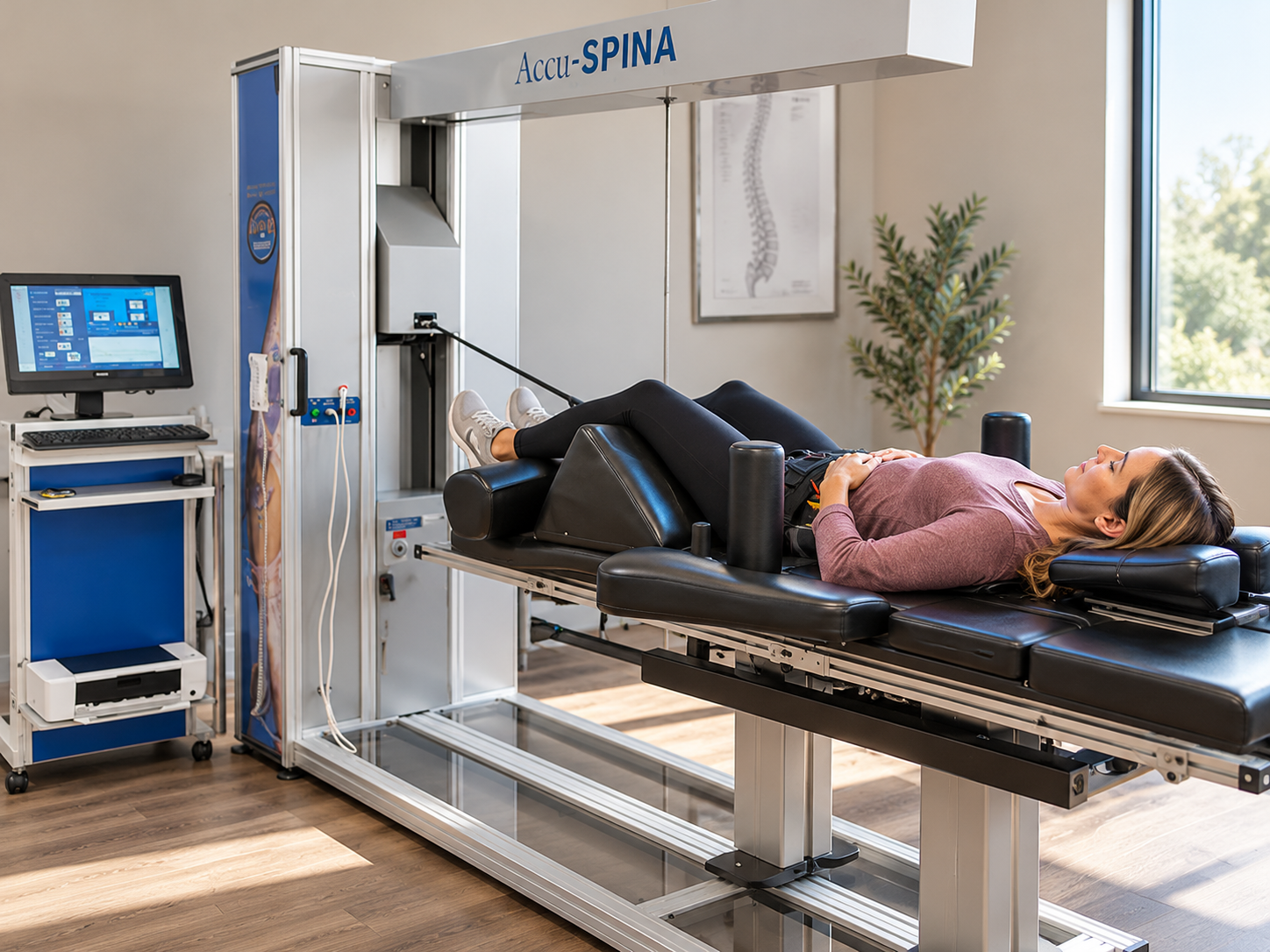
At Dr. Kate McDonough, spinal decompression therapy uses computerized traction to apply controlled forces to specific areas of the spine.
The treatment approach described by the practice includes:
💡 Smart Computerized Traction
A specialized decompression table gently stretches the spine in controlled cycles, relieving built-up pressure inside the discs.
🧲 Vacuum-Like Disc Retraction
This negative pressure draws bulging or herniated discs back into place, easing nerve pressure and reducing pain—without drugs or surgery.
💪 Boosted Healing & Circulation
Fresh oxygen and nutrients flow more freely, accelerating tissue repair, improving mobility, and promoting long-term recovery.
The goal is not simply to make the spine move differently for a short period. Treatment is intended to address mechanical factors that may contribute to discomfort and reduced function.
Results can vary, and not every person with back pain or nerve symptoms is an appropriate candidate. A proper evaluation can help determine whether spinal decompression makes sense for an individual’s condition.
Dr. Kate McDonough provides spinal decompression for several conditions associated with disc problems, nerve irritation, and spinal pain.
The practice lists the following conditions:
Herniated & Bulging Discs
Relieves disc pressure that causes sharp or radiating pain.
Degenerative Disc Disease
Slows progression and reduces inflammation without surgery.
Sciatica & Radiating Leg Pain
Takes pressure off the sciatic nerve to reduce burning or shooting pain.
Spinal Stenosis
Improves space around the spine, reducing nerve compression symptoms.
Pinched Nerves
Reduces inflammation and nerve irritation that causes numbness or tingling.
Chronic Lower Back & Neck Pain
Improves spinal alignment and mobility for lasting relief.
You can learn more through the Conditions We Treat page.
When a nerve is irritated or compressed, symptoms can affect more than comfort. Persistent symptoms may interfere with movement, work, exercise, sleep, and everyday activities.
For example, someone with radiating leg pain may avoid walking because symptoms become worse after standing. Someone with neck-related nerve irritation may find reaching, lifting, typing, or turning the head uncomfortable.
The purpose of addressing spinal pressure is therefore not simply to reduce a pain score. A broader goal may be helping the individual move more comfortably and participate in daily activities with fewer limitations.
Cleveland Clinic explains that spinal decompression may be considered for issues including bulging discs, degenerative discs, herniated discs, pinched nerves, sciatica, and spinal stenosis.
However, appropriate treatment depends on the cause of the symptoms.
People sometimes assume spinal decompression is simply another form of stretching. While both may involve changes in spinal positioning or traction, computerized decompression is designed to apply controlled forces according to a specific treatment approach.
At Dr. Kate McDonough, the practice describes true decompression as using a computerized table that adjusts based on the body’s response and targets specific spinal segments.
The treatment is intended to be gentle and non-invasive. Sessions typically last 30–45 minutes, with the patient on the decompression table for most of the treatment and supportive therapies used as needed.
Every patient’s experience can be different, but the process begins with an evaluation.
The provider may consider:
Your symptoms
Where the pain or other symptoms occur
How long you have experienced the problem
Activities that increase or decrease symptoms
Previous injuries
Previous spinal procedures
Available imaging
Your overall health and treatment goals
If you have previously had an MRI, the practice recommends bringing it to your consultation. If you have not had imaging, additional imaging may be recommended depending on your symptoms and clinical evaluation.
This individualized approach is important because back pain is not one single condition. A treatment appropriate for one person may not be appropriate for another.
When spinal decompression is appropriate for the underlying condition, intended benefits may include:
Pain relief
Reduced pressure around irritated spinal structures
Improved spinal alignment
Enhanced mobility
Disc decompression
Better circulation
Dr. Kate McDonough’s Spinal Decompression Therapy program is designed around these goals.
Spinal decompression may be considered for people experiencing certain types of back or neck problems, particularly when symptoms are associated with disc or nerve pressure.
However, not everyone is a candidate.
The practice states that people with spinal fractures, tumors, advanced osteoporosis, metal implants in the spine, or pregnancy should not undergo decompression.
A professional evaluation is therefore an essential first step. If symptoms are severe, rapidly progressing, or associated with significant neurological changes, appropriate medical evaluation should be prioritized.
One reason patients explore spinal decompression is the desire to consider non-surgical options for certain spinal conditions.
That does not mean surgery is never necessary. Some spinal conditions may eventually require surgical care, particularly when symptoms are severe or neurological complications develop.
Mayo Clinic notes that serious spinal stenosis may require surgery, while treatment decisions depend on the individual’s symptoms and condition.
Spinal decompression should therefore be viewed as one possible treatment option rather than a guarantee that surgery will always be avoided.
What conditions does spinal decompression help with?
Herniated discs, bulging discs, sciatica, degenerative disc disease, spinal stenosis, pinched nerves, and chronic back or neck pain.
How long is each session?
Sessions typically last 30–45 minutes. You’re on the decompression table for most of the time, followed by supportive therapies as needed.
Will I need imaging like an MRI?
If you’ve had an MRI, bring it. If not, we may recommend imaging depending on your symptoms and clinical evaluation.
Can I do spinal decompression if I’ve had surgery?
Sometimes. It depends on the type of surgery and how long ago it was. We’ll assess your case during the consultation.
Can spinal decompression help avoid surgery?
In many cases—yes. It’s often used as a last step before considering surgery and has helped thousands avoid it altogether.
How is this different from traction?
True decompression uses a computerized table that adjusts based on your body’s response. It’s more precise and targets specific spinal segments.
Is it covered by insurance?
Most insurance plans don’t cover spinal decompression, but we offer flexible payment options and transparent pricing.
Are there any side effects?
Mild soreness is common, similar to what you’d feel after a good workout. Most patients report little to no side effects.
Who should NOT do spinal decompression?
People with spinal fractures, tumors, advanced osteoporosis, metal implants in the spine, or who are pregnant should not undergo decompression.
What happens after the program ends?
We’ll give you a personalized maintenance plan, including exercises and posture tips, to help keep your spine healthy and pain-free.
Occasional back soreness may improve with time and basic self-care, but persistent or recurring symptoms deserve professional attention.
Seek professional care when symptoms associated with a pinched nerve persist for several days and do not respond to self-care.
You should also seek prompt medical evaluation when symptoms are severe, worsening, or accompanied by significant weakness or changes in bladder or bowel function.
Spinal symptoms can have many different causes. Identifying the source is important before choosing treatment.
If back or neck pain is interfering with the activities you enjoy, it may be time to explore your treatment options.
Dr. Kate McDonough provides personalized, non-invasive care in Marshfield, Massachusetts. Services include Chiropractic Care, spinal decompression, and laser therapy.
You can explore all available Services, read educational information through the Blog, or learn more about the practice through the About Us page.
Pressure or irritation around spinal nerves can contribute to pain, numbness, tingling, weakness, and radiating symptoms. Conditions such as herniated discs, bulging discs, degenerative disc disease, spinal stenosis, and pinched nerves can all affect the space available around spinal structures.
Spinal decompression is a non-surgical treatment approach designed to help reduce pressure on neural structures and address certain types of spinal problems. At Dr. Kate McDonough, computerized spinal decompression is customized according to the patient’s condition and needs.
While no treatment is appropriate for everyone, spinal decompression may be an option for carefully selected patients looking for non-surgical care for certain back and neck conditions.
The first step is understanding what is causing your symptoms and determining whether decompression is appropriate for you.
If you are struggling with chronic back pain, neck pain, sciatica, a herniated or bulging disc, spinal stenosis, or symptoms that may be related to nerve pressure, Dr. Kate McDonough can help you explore your options.
Contact Dr. Kate McDonough to schedule a consultation and find out whether you may be a candidate for spinal decompression therapy.
Dr. Kate McDonough
📍 Office Address: 844 Webster St, Marshfield, MA 02050, USA
📞 Phone: (781) 635-9697
📧 Email: drkatemcd@gmail.com
🌐 Website: drkatemcdonough.com