
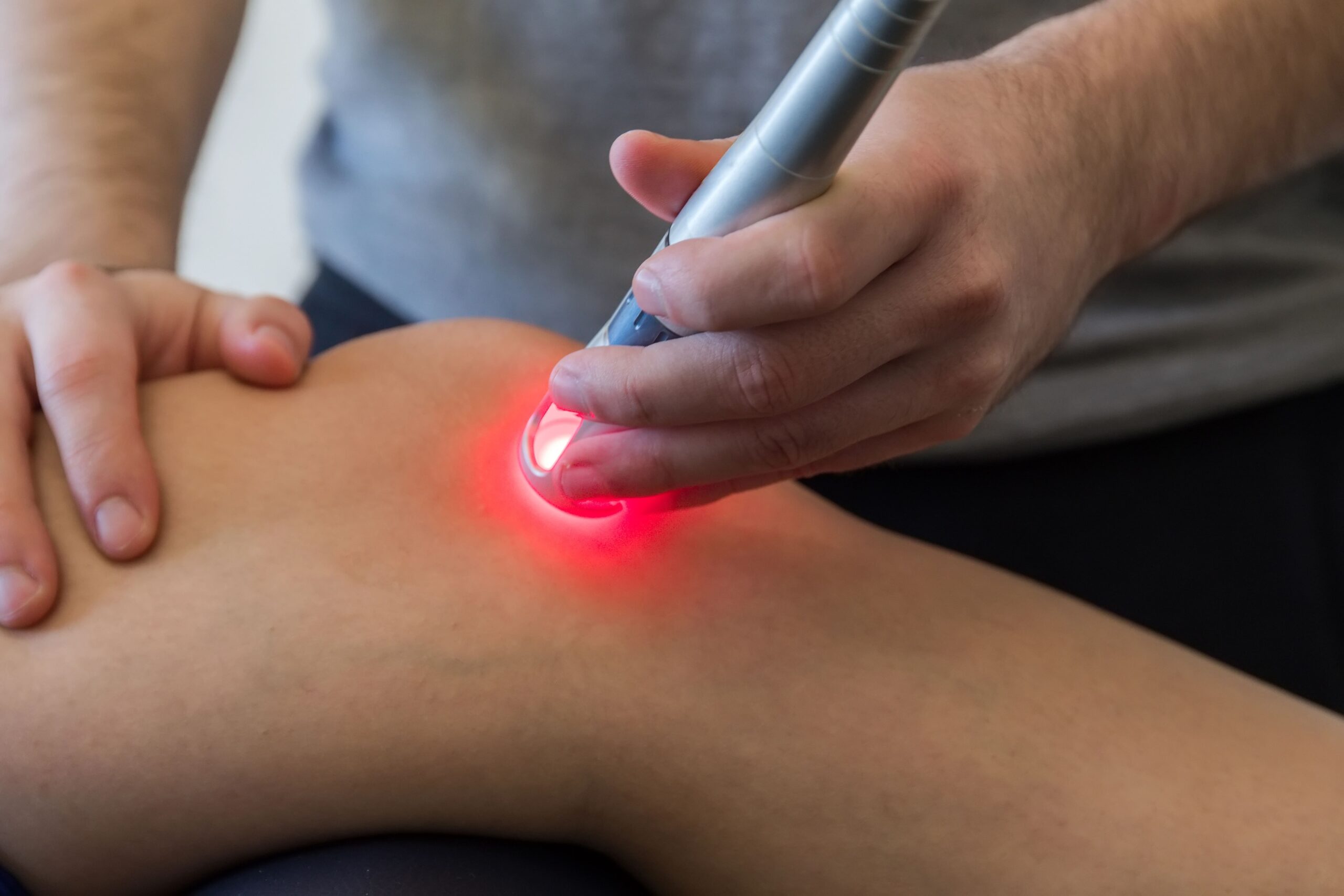
Sports injuries are an unfortunate reality for athletes of all levels. Whether you are a competitive runner, weekend warrior, CrossFit enthusiast, golfer, cyclist, or student athlete, injuries can quickly derail your training, performance, and overall quality of life. Muscle strains, ligament sprains, tendonitis, joint inflammation, and overuse injuries often require significant recovery time, forcing athletes to sit on the sidelines when they would rather be competing.
In recent years, more athletes have been exploring innovative recovery solutions that help reduce downtime and support the body’s natural healing process. One treatment that continues to gain attention is laser therapy. Known for its ability to reduce inflammation, improve circulation, decrease pain, and accelerate tissue healing, laser therapy has become an increasingly popular option for athletes seeking faster recovery without relying on medications or invasive procedures. At Dr. Kate McDonough‘s clinic, laser therapy works at the cellular level to promote tissue repair, reduce swelling, and support recovery from sports injuries and chronic pain conditions.
For athletes who are constantly pushing their bodies to perform, every day of recovery matters. Understanding why laser therapy has become a valuable part of many athletes’ rehabilitation and performance strategies can help you make informed decisions about your own recovery journey.
Laser therapy, sometimes called low-level laser therapy (LLLT) or photobiomodulation, uses specific wavelengths of light to stimulate cellular activity within injured tissues. Rather than masking symptoms, laser therapy aims to encourage the body’s natural healing mechanisms. According to WebMD, cold laser therapy beams light energy to trigger chemical changes that help damaged cells and tissues heal and regrow.
When light energy penetrates damaged tissues, cells absorb the energy and increase their production of ATP (adenosine triphosphate), which serves as fuel for cellular repair. This process may contribute to improved circulation, reduced inflammation, accelerated tissue regeneration, and decreased pain sensitivity.
Unlike surgical interventions or injections, laser therapy is non-invasive and typically requires little to no downtime. Patients can often resume normal activities shortly after treatment, making it particularly attractive to active individuals and athletes. Dr. Kate McDonough’s laser therapy services emphasize pain reduction, decreased inflammation, improved circulation, and faster healing without medication or surgery.
Athletes place tremendous demands on their bodies. Training sessions create microscopic tissue damage that must heal properly for strength, endurance, and performance improvements to occur. While some recovery is expected, injuries can significantly prolong the healing timeline.
The longer an athlete remains inactive, the more challenges they may face, including:
Loss of strength
Reduced flexibility
Decreased cardiovascular fitness
Impaired athletic performance
Mental frustration
Increased risk of compensatory injuries
Because of these concerns, athletes are continually searching for treatments that can support healing while minimizing interruptions to training schedules. Laser therapy offers an appealing solution because it targets the biological processes involved in tissue repair rather than simply suppressing symptoms.
Athletes experience a wide range of injuries depending on their sport, training intensity, and movement patterns. Dr. Kate McDonough’s practice commonly utilizes laser therapy for numerous musculoskeletal conditions, including sports-related injuries.
Muscle strains occur when muscle fibers are overstretched or torn. These injuries frequently affect the hamstrings, quadriceps, calves, and lower back.
Laser therapy may help by:
Improving circulation
Reducing inflammation
Supporting cellular repair
Minimizing pain
Faster tissue healing can potentially help athletes return to activity more efficiently when combined with appropriate rehabilitation.
Sprains involve damage to ligaments that stabilize joints. Common examples include ankle sprains and knee ligament injuries.
Ligaments often receive limited blood supply compared to muscles, which can slow healing. Laser therapy may help improve local circulation and stimulate tissue repair processes that support recovery.
Repetitive movements can lead to inflammation and irritation of tendons. Athletes frequently experience:
Tennis elbow
Golfer’s elbow
Achilles tendonitis
Patellar tendonitis
Rotator cuff tendonitis
Laser therapy has become increasingly popular among athletes dealing with tendon-related injuries because of its ability to address inflammation while supporting tissue healing.
Athletes often place significant stress on their joints through repetitive movement, impact, and heavy loading.
Common problem areas include:
Knees
Shoulders
Hips
Ankles
Elbows
Laser therapy may assist by decreasing inflammation within surrounding tissues while promoting improved blood flow and recovery.
Overuse injuries develop gradually when tissues fail to recover adequately between training sessions.
Examples include:
Shin splints
Stress-related soft tissue injuries
Chronic tendon irritation
Repetitive strain injuries
Because these conditions often involve persistent inflammation, laser therapy can be a valuable component of a comprehensive recovery strategy.
One reason athletes are increasingly interested in laser therapy is its focus on the biological healing process itself.
Cells require energy to repair damaged tissues. Laser therapy stimulates mitochondrial activity, increasing ATP production. More cellular energy may allow injured tissues to recover more efficiently.
Inflammation is a natural healing response, but excessive or prolonged inflammation can delay recovery and contribute to pain.
Laser therapy has been shown to help reduce inflammatory activity within injured tissues. Less inflammation often means:
Reduced pain
Improved mobility
Faster functional recovery
This is particularly important for athletes who need to regain full movement as quickly as possible.
Circulation plays a crucial role in healing by delivering oxygen and nutrients to injured tissues.
Laser therapy promotes increased blood flow, which may support:
Tissue regeneration
Waste removal
Nutrient delivery
Reduced swelling
Better circulation often translates into more efficient healing.
Muscles, ligaments, tendons, and nerves all require cellular repair after injury.
Laser therapy encourages tissue regeneration and healing processes that can help athletes recover from injuries more effectively.
Athletes who incorporate laser therapy into their recovery programs frequently seek several specific benefits.
One of the biggest reasons athletes pursue laser therapy is the possibility of returning to training sooner.
Athletes often use laser therapy because it supports faster healing, improved muscle recovery, reduced swelling, and a quicker return to activity.
Many athletes prefer to avoid prolonged use of pain medications whenever possible.
Laser therapy offers a non-pharmaceutical option that addresses pain by targeting inflammation and tissue dysfunction rather than simply masking symptoms.
Swelling can significantly limit movement and prolong recovery.
Laser therapy helps decrease swelling by promoting circulation and reducing inflammatory activity, which may improve mobility and comfort.
Even athletes without major injuries often seek recovery solutions to optimize performance.
Faster muscle recovery can support:
Better training consistency
Reduced soreness
Improved readiness for competition
Enhanced athletic longevity
Unlike surgery or more invasive procedures, laser therapy typically requires little disruption to an athlete’s schedule.
Sessions are generally brief, and patients can often return to normal activities immediately afterward. Dr. Kate McDonough notes that many laser therapy treatments take only a few minutes depending on the treatment area.
Although laser therapy can be a valuable treatment option, the best results often occur when it is integrated into a broader rehabilitation strategy.
Athletes may combine laser therapy with:
Chiropractic care
Therapeutic exercises
Mobility training
Soft tissue therapy
Strengthening programs
Recovery protocols
Learn more about us and Dr. Kate McDonough’s approach to sports injury care emphasizes individualized treatment plans designed to reduce pain, restore mobility, improve strength, and prevent future injuries. Treatment options may include chiropractic adjustments, soft tissue therapies, rehabilitation exercises, and other supportive interventions.
Because every athlete and injury is unique, personalized care remains essential.
Laser therapy is not limited to professional athletes.
Potential candidates include:
Young athletes participating in:
Soccer
Basketball
Baseball
Volleyball
Track and field
often experience repetitive stress injuries and acute sports injuries that may benefit from conservative treatment options.
Recreational athletes frequently push themselves hard during limited training opportunities. Laser therapy may help support recovery from unexpected injuries and soreness.
Runners, cyclists, swimmers, and triathletes often experience chronic overuse conditions that can interfere with performance.
Powerlifters, bodybuilders, and CrossFit participants frequently deal with joint stress, tendon irritation, and muscle strains.
Even individuals who simply enjoy staying active through walking, hiking, tennis, or fitness classes may benefit from faster recovery and improved mobility.
Many athletes are surprised by how simple laser therapy treatments can be.
A typical session may involve:
Evaluation of the injury or condition
Identification of treatment areas
Application of laser therapy to targeted tissues
Brief treatment duration
Return to normal activities
Patients generally experience little to no discomfort during treatment. Some individuals notice mild warmth or tingling sensations, while others feel nothing at all. At Dr. Kate McDonough’s clinic, laser therapy is painless, non-invasive, and associated with minimal side effects.
Results vary depending on the injury, severity, and individual healing response. Some patients report improvement after only a few sessions, while others may require a more extensive treatment plan.
Athletes today have more treatment options than ever before. Yet many continue moving toward conservative, non-invasive approaches whenever appropriate.
Reasons include:
Reduced risk compared to surgery
Minimal recovery time
Drug-free treatment options
Ability to stay active
Focus on addressing root causes
Support for long-term performance goals
Laser therapy aligns well with these priorities by helping the body heal naturally while minimizing interruptions to training and competition.
Laser therapy is commonly used for muscle strains, ligament sprains, tendonitis, joint injuries, soft tissue injuries, shin splints, overuse injuries, and various sports-related pain conditions.
Laser therapy is generally considered a safe, non-invasive treatment when administered by trained healthcare professionals. It does not require surgery or medications and is associated with minimal side effects.
Some patients notice improvement after their first few treatments, while others may require several sessions before experiencing significant changes. Recovery timelines vary depending on the injury and individual response.
No. Most patients experience little to no sensation during treatment. Some may notice mild warmth or tingling.
Yes. Laser therapy is often used alongside chiropractic care, rehabilitation exercises, soft tissue treatments, and other therapies to support comprehensive recovery.
Treatment times vary based on the area being treated, but many sessions are completed in just a few minutes.
While no treatment can completely eliminate injury risk, laser therapy may support tissue recovery and healing, which can be beneficial when combined with proper training, rehabilitation, mobility work, and preventative care strategies.
Athletes are always looking for ways to recover smarter, heal faster, and perform at their best. As awareness grows around non-invasive recovery options, laser therapy continues to attract attention for its ability to reduce pain, decrease inflammation, improve circulation, and promote tissue healing at the cellular level. Whether recovering from a muscle strain, tendon injury, ligament sprain, or chronic overuse condition, many athletes are finding that laser therapy helps support a faster and more efficient recovery process.
By addressing the biological mechanisms behind healing rather than simply masking symptoms, laser therapy has become an increasingly valuable tool in modern sports injury management. Combined with personalized care, rehabilitation, and injury prevention strategies, it can help athletes return to the activities they love with greater confidence.
If you’re dealing with a sports injury, chronic pain, or prolonged recovery time, Dr. Kate McDonough offers advanced laser therapy designed to support healing, reduce inflammation, and help you get back to doing what you love.
Dr. Kate McDonough
📍 Office Address: 844 Webster St, Marshfield, MA 02050, USA
📞 Phone: (781) 635-9697
📧 Email: drkatemcd@gmail.com
🌐 Website: https://drkatemcdonough.com/
Schedule an appointment today to learn whether laser therapy may be the right solution for your recovery goals.